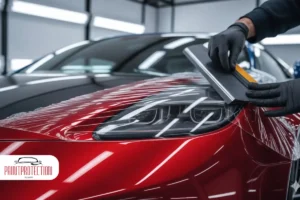

When it comes to protecting your car’s paint from scratches, chips, & environmental damage, choosing the right Paint Protection Film (PPF) can make all the difference. Two of the most recognized names in the industry — 3M Scotchgard & LLumar — are often compared by car enthusiasts who want top-tier performance & lasting shine. The debate of 3M Scotchgard vs LLumar continues as both brands bring their unique strengths to the table.
In this detailed 3M Scotchgard vs LLumar Comparison, we’ll break down the differences in durability, gloss, installation, maintenance, & warranty to help you decide which one suits your vehicle best. Whether you’re upgrading your car’s protection or exploring premium PPF options, Paintpotectionfilmppf will guide you through every detail to make an informed decision.
Overview of 3M Scotchgard & LLumar PPF
When it comes to premium paint protection films, 3M Scotchgard & LLumar stand out for their proven reliability & innovative technologies. Both brands have earned their place in the automotive industry by offering cutting-edge solutions that safeguard vehicle exteriors from everyday wear & tear.
About 3M Scotchgard
3M Scotchgard is developed by 3M — a pioneer in automotive protection technology. The film is designed to resist scratches, stains, & yellowing, ensuring your vehicle maintains a glossy finish over time. 3M Scotchgard PPF features a self-healing top coat that repairs minor scratches with heat exposure, giving your car a flawless appearance year-round. It’s available in multiple variations, including matte & high-gloss finishes, making it suitable for various vehicle styles & paint types.
Key advantages of 3M Scotchgard PPF include:
- Exceptional resistance to road debris, insects, & weather.
- Long-lasting gloss retention.
- Easy maintenance & cleaning.
- UV resistance to prevent paint fading.
About LLumar PPF
LLumar Paint Protection Film is known for its superior clarity, stain resistance, & self-healing surface. Manufactured by Eastman Performance Films, LLumar PPF combines advanced polymer technology with strong adhesive bonding to provide seamless coverage. The brand offers different series like LLumar Platinum & LLumar Valor, catering to different user preferences — from ultra-glossy finishes to enhanced hydrophobic properties.
Key benefits of LLumar PPF include:
- Advanced self-healing & hydrophobic coating.
- Exceptional optical clarity for a clean, invisible finish.
- Strong chemical & stain resistance.
- Long-term durability with industry-leading warranty support.
While both 3M Scotchgard vs LLumar PPF deliver outstanding protection, each has unique characteristics that may better suit certain vehicle types, climates, or usage patterns. Understanding these distinctions is essential for making the right investment for your vehicle’s long-term aesthetics.
3M Scotchgard vs LLumar: Key Differences
When comparing 3M Scotchgard vs LLumar, it’s clear that both brands provide excellent protection — but the real difference lies in performance, appearance, & maintenance. Below, we’ll break down the key distinctions that set them apart.
1. Material Composition & Technology
3M Scotchgard uses multi-layer polyurethane film enhanced with elastomeric polymers that help the surface self-heal when exposed to heat. Its technology focuses on long-term paint retention & flexibility.
On the other hand, LLumar PPF utilizes advanced elastomeric polymers & a hydrophobic top layer, offering enhanced water repellency & reduced surface contamination. This makes cleaning easier & maintains shine for a longer period.
Verdict:
If you prioritize hydrophobic protection & easier maintenance, LLumar edges ahead. For balanced performance & flexibility, 3M Scotchgard remains a strong contender.
2. Gloss & Aesthetic Appeal
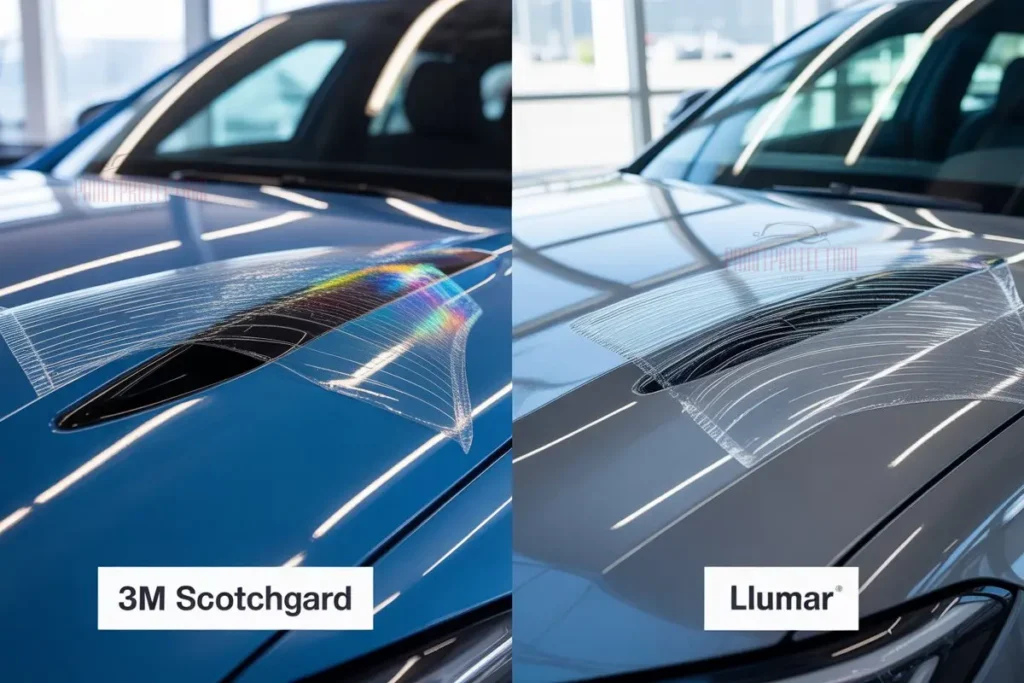
Both 3M Scotchgard & LLumar films offer excellent gloss levels, but LLumar PPF tends to deliver a slightly deeper, mirror-like finish. Its optical clarity enhances the paint’s natural tone, giving your vehicle a showroom appearance.
3M Scotchgard, however, is more versatile with both matte & gloss variants, allowing customization based on your car’s finish.
Verdict:
Choose LLumar for maximum gloss; go for 3M Scotchgard if you want more finish options.
3. Durability & Longevity
Durability is one of the biggest concerns for car owners. 3M Scotchgard PPF can last up to 10 years under optimal conditions, maintaining protection against chips, scratches, & UV damage.
LLumar PPF also offers comparable longevity but with enhanced stain resistance. Thanks to its hydrophobic top coat, it better resists discoloration caused by bird droppings, chemicals, & road grime.
Verdict:
Both are long-lasting, but LLumar may perform slightly better in harsh climates or dusty conditions.
4. Self-Healing Ability
Both films feature self-healing properties, meaning minor scratches disappear when heat is applied. However, LLumar PPF tends to heal faster due to its thinner top coat design that responds efficiently to ambient heat.
3M Scotchgard also offers impressive healing capabilities but requires slightly more direct heat exposure (sunlight or hot water) for best results.
Verdict:
For faster healing, LLumar takes the lead. For thicker film & enhanced protection, 3M Scotchgard is ideal.
5. Installation Experience
3M Scotchgard PPF is known for its precision fit, especially when installed by certified professionals. The pre-cut templates from 3M’s database ensure accuracy for specific vehicle models.
LLumar, on the other hand, provides flexible installation & superior adhesion even on complex curves. Professional installers appreciate its stretchability & minimal edge lift issues.
Verdict:
Both are installer-friendly, but LLumar may provide a slightly smoother application on complex surfaces.
6. Maintenance & Cleaning
Maintaining either film is simple, but LLumar’s hydrophobic coating gives it an advantage. Dirt, water, & grime slide off easily, reducing the need for frequent washes.
3M Scotchgard, though easy to maintain, can accumulate dust faster if not properly sealed with a top coat or maintenance spray.
Verdict:
For those who prefer less upkeep, LLumar PPF wins in maintenance convenience.
7. Warranty & Value
Warranty is a crucial factor in the 3M Scotchgard vs LLumar Comparison.
3M Scotchgard offers up to a 10-year warranty covering defects like yellowing & cracking.
LLumar provides similar coverage but also extends protection against delamination & peeling in certain models.
Verdict:
Both brands deliver reliable warranty support, but LLumar offers slightly broader coverage terms.
Performance Comparison: Real-World Testing of 3M Scotchgard vs LLumar
When choosing between 3M Scotchgard vs LLumar, real-world performance is key. Here we’ll explore how each performs under actual driving & environmental conditions — based on user experiences, testing reports & installer feedback.
Durability & Road Debris Resistance
One of the most important performance parameters for a paint protection film (PPF) is how well it holds up against rock chips, road debris, and general wear & tear.
- According to the manufacturer, the 3M Scotchgard Paint Protection Film Pro Series offers “superior protection … against scratches, chips and weathering” and is backed by a 10-year warranty.
- For LLumar, the product overview highlights that LLumar PPF “helps protect your vehicle’s finish against stone chips, bug damage, abrasion and weathering” and offers “virtually invisible” clarity.
- Installer commentary & owner feedback suggest that while both films perform well, application quality and environment matter a lot. For example, in one forum a user reported with 3M: “Here in Houston you’d be lucky to get one summer without it getting brittle, yellowing, looking hazy or edges beginning to lift.”
- For LLumar, some users pointed out great clarity & finish, though occasionally raising concerns about thickness: “LLumar and Suntek are the exact same products. They are both great for protecting paint. Go with their higher end Valor if I were to make a suggestion.”
Summary: In terms of durability, both 3M Scotchgard & LLumar perform at a high level when properly installed & maintained, but local conditions (sun, debris, chemicals) and installer skill can have a major impact.
Clarity & Aesthetic Finish
How invisible the film looks, how it maintains shine, gloss, and how it affects paint colour all matter for vehicle owners who care about appearance.
- 3M states its film has “exceptional clarity” and “low orange peel” to maintain the vehicle’s original appearance.
- LLumar claims “the most optically clear paint protection film in the industry” in its marketing copy.
- Review sites note that LLumar (and its sibling SunTek) might offer slightly better clarity or hydrophobic/higher-gloss finish than some competitors. For example: “It’s argued that the LLumar Platinum and SunTek Ultra films have greater clarity and enable a higher-gloss finish than other films on the market.”
Summary: If your priority is maximum visual finish, LLumar may have a slight edge; if you’re choosing for balanced performance (durability + clarity) then 3M remains very competitive.
Self-Healing & Maintenance Attributes
The ability of the film to “self-heal” minor scratches and maintain surface quality over time influences long-term value.
- 3M’s marketing for its Pro Series film includes a “self-healing formula that enables minor scratches to disappear by themselves.”
- LLumar is noted for hydrophobic properties and clarity, though some third-party commentary suggests its self-healing may be less emphasized compared to some ultra-premium brands.
- Installer/owner feedback: Some users felt the 3M product in certain climates may “become brittle” or show edge lift unless the installer is top-tier.
Summary: Both films support self-healing or minor scratch recovery, but the real benefit comes when paired with proper washing/maintenance. For owners who want lower upkeep, the hydrophobic/clarity features of LLumar might sway them.
Environmental & Climate Performance
Since we are targeting the USA market and vehicles in many regions face extremes of sun, heat, salt, road debris, it’s essential to compare how each film stands up to climate.
- A brand-comparison article states: “LLumar has a wide variety of products … with a heavy emphasis on heat rejection and UV protection … especially in warmer climates … 3M … built for performance and longevity …”
- Some user feedback on 3M noted issues in high-sun regions: “Here in Houston … you’d be lucky to get one summer without it getting brittle, yellowing…”
Summary: In hot, sun-intensive or salt-laden environments (e.g., Florida, Southwest, coastal USA), LLumar’s focus on UV/heat performance may provide edge. However, in more moderate climates the difference may be minimal, and installation/maintenance still dominate performance outcomes.
Installer & Real-World User Feedback
The best materials can still underperform if not installed or maintained properly.
- One commentary on 3M: “For me, it’s not even about the film as first decision. It’s all about the installer.”
- For LLumar, while clarity and finish are praised, some users indicated they would have preferred slightly thicker film in heavy-use contexts.
Summary: No matter whether you choose 3M Scotchgard or LLumar, the installer’s skill, the environment, and how the vehicle is maintained can make a bigger difference than the nominal brand differences.
Value for Money & Long-Term Performance
For owners in the USA seeking the best long-term protection, how the film performs relative to cost is key.
- Brand comparisons suggest: “If you go with 3M, you will get a quality film. … If you want hydrophobic built-in properties … LLumar and SunTek may have that advantage.”
- Considering warranties, user maintenance, and replacement/repair costs over time, both provide solid value when installed correctly and cared for.
Summary: Both brands deliver good value for the long haul — the differences come down to your driving conditions, whether you prioritize aesthetics vs protection, and how much you will wash/maintain the car.
Which One Should You Choose? Application Scenarios for 3M Scotchgard vs LLumar
Choosing between 3M Scotchgard vs LLumar depends on your vehicle type, driving habits, climate, & personal preferences. Below, we break down common scenarios to help you decide which PPF suits your needs best.
1. Daily Commuters & City Drivers
If your vehicle spends most of its time in urban traffic, dealing with minor scratches, door dings, & occasional road debris:
- 3M Scotchgard PPF offers durable protection with excellent scratch resistance & a variety of finish options.
- LLumar PPF also works well in cities, with added hydrophobic properties that make cleaning quicker & easier.
Recommendation: Both work well, but if ease of maintenance is your priority, LLumar may be more convenient.
2. Highway & Long-Distance Drivers
Vehicles frequently traveling on highways are more exposed to stones, bugs, & small debris.
- 3M Scotchgard is known for its thicker layers & chip resistance, ideal for long drives.
- LLumar provides a slightly thinner film but with excellent optical clarity & hydrophobic properties, reducing dirt accumulation on long routes.
Recommendation: If maximum chip protection is a priority, 3M Scotchgard is preferable; if you value cleaner paint with less washing, LLumar is ideal.
3. High-Gloss & Show Cars
For vehicles that require showroom-level aesthetics or participate in car shows:
- LLumar PPF excels with mirror-like clarity & deep gloss finish.
- 3M Scotchgard also maintains gloss but offers matte options, which may not appeal to show car enthusiasts.
Recommendation: LLumar is better suited for high-visibility cars where appearance is the top priority.
4. Harsh Climate Conditions
For areas with intense sun, salt exposure, or extreme weather:
- LLumar PPF performs slightly better in UV & heat resistance, thanks to its hydrophobic top layer.
- 3M Scotchgard still offers robust protection, but some users report minor yellowing over long-term exposure in high-heat regions.
Recommendation: For hot or coastal areas in the USA, LLumar may offer better long-term performance.
5. Budget Considerations
Both 3M Scotchgard vs LLumar PPF are premium films, but:
- 3M is slightly more widely available & may offer competitive pricing through installers.
- LLumar’s advanced properties may come at a modestly higher cost but could reduce long-term maintenance.
Recommendation: Consider your priority — initial cost vs maintenance convenience & finish quality.
Installation & Maintenance Tips for 3M Scotchgard & LLumar PPF
Proper installation & maintenance play a crucial role in maximizing the performance & lifespan of your 3M Scotchgard vs LLumar Paint Protection Film. Here’s what you need to know:
1. Professional Installation is Key
Both 3M Scotchgard & LLumar PPF are precision-engineered films that require careful handling. While DIY installation is possible, professional installation is highly recommended for optimal results.
- Certified installers ensure perfect alignment, bubble-free application, & minimal edge lifting.
- Pre-cut templates from 3M & LLumar make installation faster & more accurate.
- Proper installation prevents premature yellowing, peeling, or scratches during the curing process.
2. Surface Preparation Before Installation
- Wash & decontaminate the vehicle’s surface thoroughly.
- Remove any wax, grease, or paint sealants to ensure strong adhesion.
- Avoid installation on hot surfaces or direct sunlight to prevent the film from stretching unevenly.
3. Cleaning & Maintenance Tips
Regular maintenance prolongs the life & clarity of both 3M Scotchgard vs LLumar PPF:
- Use gentle cleaning solutions: Avoid harsh chemicals, abrasive sponges, or brushes. Mild car shampoo & soft microfiber cloths are ideal.
- Rinse thoroughly: Always rinse the surface before washing to remove dirt & grit that could scratch the film.
- Avoid automatic car washes: Brushes & high-pressure water jets can damage the edges or surface.
- Inspect regularly: Check for minor scratches & use heat (sunlight or warm water) for self-healing surfaces.
4. Waxing & Protective Coatings
- Both films are compatible with ceramic coatings or sealants for added protection.
- Apply coatings designed for PPF to enhance hydrophobicity & maintain gloss without damaging the film.
- Avoid silicone-based products as they can leave a residue or interfere with adhesion.
5. Handling Edge & Corner Areas
- Extra care is needed at edges, seams, & curved surfaces to prevent lifting.
- For complex areas, professional installers often use edge-wrap techniques to ensure long-lasting adhesion.
Following these installation & maintenance practices ensures that your 3M Scotchgard vs LLumar PPF remains clear, scratch-free, & visually appealing for years to come. Proper care not only enhances performance but also protects the investment you’ve made in your vehicle.
Pros & Cons of 3M Scotchgard vs LLumar PPF
Understanding the advantages & limitations of 3M Scotchgard vs LLumar is essential before making a decision. Here’s a detailed breakdown:
Pros of 3M Scotchgard PPF
- Durability & Protection: Excellent resistance to chips, scratches, & minor abrasions.
- Self-Healing Ability: Minor scratches disappear with heat exposure.
- Multiple Finishes: Available in high-gloss & matte options for customization.
- Long Warranty: Up to 10-year coverage against yellowing, cracking, or defects.
- Wide Availability: Easily accessible through certified installers across the USA.
Cons of 3M Scotchgard PPF
- Hydrophobic Properties: Slightly less water & dirt repellency compared to LLumar.
- Gloss Depth: While high-quality, the mirror-like finish may be slightly less pronounced than LLumar.
- Installation Sensitivity: Requires precise handling; edges may lift if installed improperly.
Pros of LLumar PPF
- Optical Clarity & Gloss: Delivers a deep, mirror-like finish that enhances vehicle aesthetics.
- Hydrophobic Surface: Water, dirt, & grime slide off easily, reducing maintenance.
- Self-Healing Technology: Minor scratches disappear quickly with heat.
- UV & Heat Resistance: Performs well in sunny or coastal regions, minimizing yellowing.
- Flexible Installation: Stretches well over complex curves, reducing edge lift risks.
Cons of LLumar PPF
- Cost: Slightly higher price point than 3M Scotchgard in some regions.
- Film Thickness: Thinner than 3M, which may reduce heavy-duty chip resistance.
- Limited Finish Options: Primarily high-gloss, fewer matte alternatives.
Conclusion: Both 3M Scotchgard vs LLumar PPF offer premium protection & aesthetics. The choice ultimately depends on whether you prioritize durability, self-healing, gloss, hydrophobic properties, or budget considerations.
Pricing & Value Comparison of 3M Scotchgard vs LLumar
When comparing 3M Scotchgard vs LLumar for paint protection film (PPF), pricing isn’t just about the sticker price — it’s about the value you get relative to coverage, durability, finish, installation ease, warranty, and long‑term maintenance. Below we break down key pricing factors, typical cost ranges in the USA, and how to evaluate true value.
Typical Price Ranges in the USA
Here are approximate price ranges based on market listings (note: actual installer quotes will vary by vehicle size, coverage area, finish, region, and labour).
- For 3M Scotchgard as a material: According to 3M’s own site the “Pro Series” is backed by a 10‑year warranty.
- One listing shows a roll of 3M Scotchgard Series 200 being offered in Europe at ~€66‑106 for specific widths.
- Another listing shows bulk film of 3M Scotchgard priced at US$185‑205 per roll (1.52 × 15 m) in a marketplace.
- For LLumar: Their site lists multiple finishes (Platinum Gloss, Matte, Valor, etc) with factory‑backed warranties.
- A marketplace listing for LLumar Platinum PPF shows ~$180‑$280 per roll (1.524 × 15 m) in bulk.
- Installer packages in the USA show quoted bundles for LLumar PPF starting at US $1,500 for a “partial” high‑impact area, going up to US $6,500+ for full‑vehicle coverage.
What Affects the Price
When you get a quote for either 3M Scotchgard or LLumar, expect the following factors to influence cost:
- Coverage area — A full‑car wrap costs significantly more than front‑bumper or high‑impact area coverage.
- Film series / finish — Premium finishes (matte, high gloss, ultra‑hydrophobic, “Valor” or “Platinum Extra”) command a higher price.
- Vehicle complexity — Curves, exposed seams, complex shapes, multi‑pad panels all increase labour & material usage.
- Installation quality — A certified, precision‑trained installer will cost more but will reduce defects, edge lifting, and ensure better long‑term performance.
- Region & market — Urban regions with high labour cost can push quotes higher; dealership vs independent installer also affects pricing.
- Warranty & extras — The length of warranty, what’s covered (yellowing, peeling, cracking), and whether full‑car edge‑wrap or only section‑wrap is included all matter.
Value Comparison: 3M Scotchgard vs LLumar
Here’s how the two compare from a value perspective, given what you’re getting for your money.
3M Scotchgard – Value Strengths
- Strong brand with long‐standing reputation in PPF.
- Backed by a 10‑year warranty for materials & defects.
- Offers both gloss & matte finishes, giving flexibility in look & budget.
- Potential for lower installed cost if you choose standard finish & partial coverage — good for budget‑conscious buyers.
3M Scotchgard – Value Considerations
- While the material may cost less than the top‐end films of competitors, installer cost & labour still dominate total cost.
- If you go for high‑end finishes (e.g., full wrap, edge‑wrap, vehicle with complex panels), the incremental cost may approach that of premium competitors.
- You may sacrifice some of the “bells & whistles” (ultra‑hydrophobic finish, ultra‑high gloss) if choosing a standard version.
LLumar – Value Strengths
- Offers premium finishes with advanced features (e.g., their “Valor” or “Platinum Extra” series) and deep optical clarity.
- Hydrophobic, advanced self‑healing and high clarity mean less frequent maintenance/rewraps if installed correctly — that improves long‑term value.
- Strong warranty backing (10‑year in many cases) for premium models.
- Ideal for show‑cars, premium vehicles or owners that demand “best in class” finish.
LLumar – Value Considerations
- Up‑front cost is higher — both material cost (per roll) and labour because premium finish and full coverage will drive price up.
- The incremental benefit (premium finish, hydrophobic coating) may not justify the extra cost for commuter vehicles or modest usage patterns.
- If installation or maintenance is sub‑optimal, the premium features may go under‑utilized — reducing value.
Which Gives Better “Value” for You?
Based on your vehicle usage, budget and goal, here are some guiding considerations:
- If you drive a daily/commuter vehicle, where durability and cost‑effectiveness matter more than showroom finish — 3M Scotchgard offers very good value.
- If you have a high‑end vehicle, show car, or one in harsh conditions (sun, salt, frequent long drives) and you want best‑in‑class finish and minimal maintenance — then the extra spend for LLumar may be justified.
- Consider your coverage area: If you only wrap high‑impact areas (hood, bumper, fenders) rather than full car, the pricing difference narrows.
- Factor in installer quality: Regardless of brand, a poor install will undermine long‑term value — so allocate budget to a great installer rather than cutting corners on material choice alone.
- Think about long‑term cost: A premium film that lasts 8‑10 years with minimal maintenance may prove cheaper over time than a cheaper film that requires replacement or suffers edge‑lift issues.
Final Thought
Choosing the right Paint Protection Film is a crucial decision for maintaining your vehicle’s aesthetics, durability, & long-term value. Both 3M Scotchgard vs LLumar offer premium protection, innovative self-healing technology, & excellent warranties.
- 3M Scotchgard excels in versatility, offering both matte & gloss finishes, strong chip resistance, & slightly lower cost for budget-conscious buyers.
- LLumar, on the other hand, shines with superior clarity, hydrophobic properties, and enhanced gloss — making it ideal for show cars, high-end vehicles, & harsh climate conditions.
Ultimately, the choice comes down to your priorities: if you want balanced performance & affordability, 3M Scotchgard is a solid option. If premium finish, ease of maintenance, & optical clarity are your top concerns, LLumar may be worth the extra investment.
At Paintpotectionfilmppf, we recommend evaluating your driving habits, climate exposure, and desired finish before making a decision. Both brands are industry leaders, and when installed by professionals, either will keep your vehicle protected & looking flawless for years to come.
FAQs
Q1: Is LLumar PPF better than 3M?
Both are premium PPF brands; LLumar excels in clarity & hydrophobic finish, while 3M Scotchgard offers versatile finishes & strong chip protection.
Q2: What is the best brand for PPF coating?
Top brands include 3M Scotchgard & LLumar, chosen based on your priorities like durability, gloss, & maintenance needs.
Q3: What is the difference between 3M and LLumar?
3M focuses on versatile finishes & self-healing, whereas LLumar offers superior clarity, hydrophobic coating, & mirror-like gloss.
Q4: Which PPF is best in Pakistan?
Both 3M Scotchgard & LLumar are available in Pakistan; choice depends on budget, climate, & desired finish quality.
Q5: What is the best brand for PPF coating?
For long-term protection & aesthetics, 3M Scotchgard & LLumar remain top choices, with selection based on your vehicle’s needs.