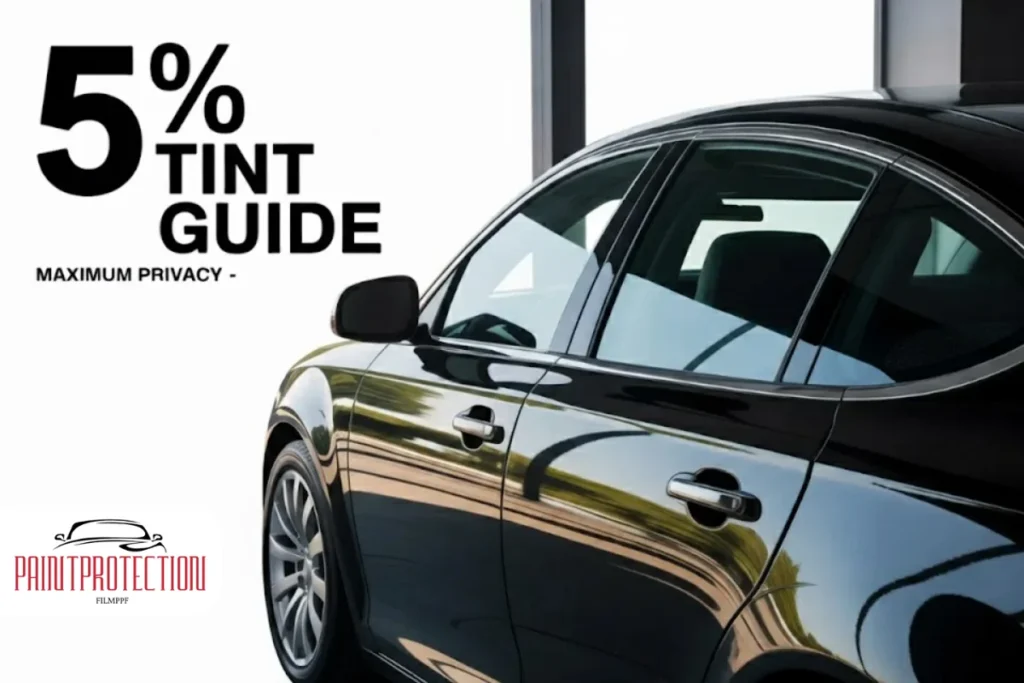
5 percent tint is the darkest commonly used window tint for vehicles, letting only 5 percent of visible light pass through the glass. This ultra-dark shade provides maximum privacy, heat reduction, and a sleek appearance, but it also raises important legal and safety concerns that every car owner in the USA should know.
Many drivers want the bold, high-end look that 5 percent tint offers, yet choosing the wrong shade can lead to fines, poor visibility, and costly replacements. This guide will explain what 5 percent tint really is, its benefits, state-specific laws, installation tips, and costs, so you can make an informed choice and enjoy your car safely.
By the end, you’ll understand whether 5 percent tint is the right choice for your vehicle and how to install it correctly without legal trouble.
What Does “5 Percent Tint” Mean?
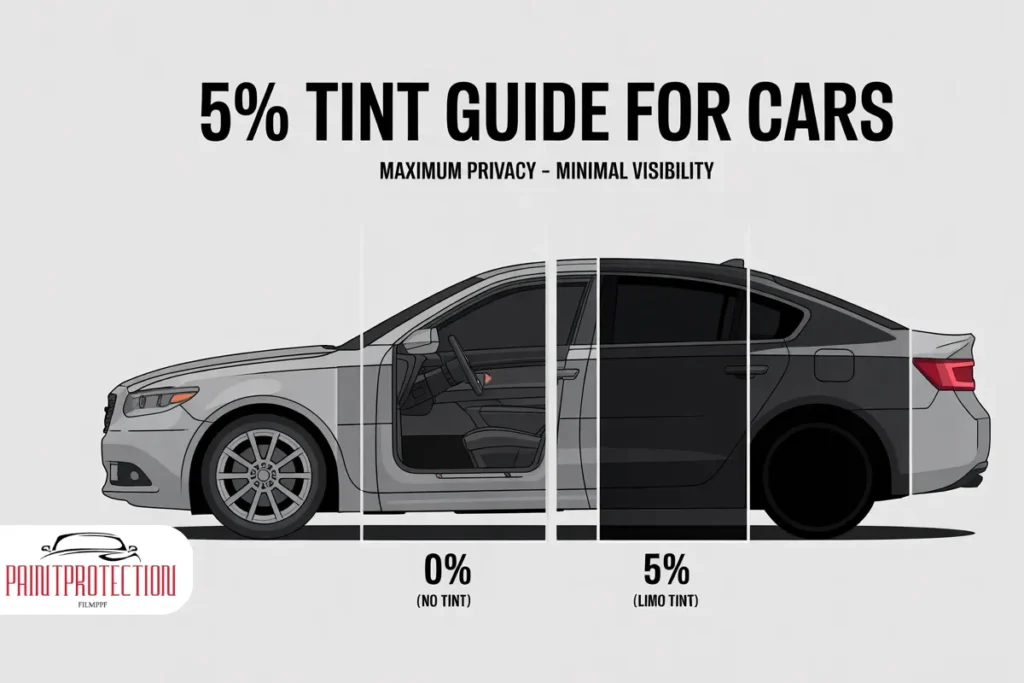
5 percent tint refers to a window film with a Visible Light Transmission (VLT) of 5 %, meaning only 5 % of incoming visible light passes through the glass. The rest is absorbed or reflected.
- Very dark shade: Only a tiny fraction of light gets inside.
- Also called “limo tint”: Commonly used on limousines and luxury vehicles for maximum privacy.
- Difference from higher percentages: A 35 % tint lets in much more light, balancing visibility and shade.
Because of the low light transmission, 5 % appears almost opaque from outside during daytime.
How 5 % Tint Works
Window tint works by applying a film to your car glass that limits light and heat. With 5 % tint:
- Light block: 95 % of visible light is blocked.
- Privacy increase: Outsiders can’t see inside during daylight.
- Glare reduction: Sunlight and headlights are significantly dimmed.
- Heat and UV protection: Some films reject up to 99 % of UV rays, preserving interiors and reducing cabin heat.
Depending on the film technology (dyed, metalized, or ceramic), these benefits vary in strength and cost.
Benefits of 5 % Tint
Here’s why many car owners choose 5 % tint:
Maximum Privacy
- Virtually no one can see inside your car during the day.
- Helps protect valuables and enhances security.
Heat Management and Comfort
- Significant heat reduction inside the cabin.
- Reduces strain on air conditioning and improves comfort.
UV Protection
- High-quality films block most harmful UV rays.
- Helps prevent interior materials from fading.
Aesthetic Appeal
- Deep dark shade gives cars a sleek, premium look.
- Often preferred for show cars or luxury vehicles.
Legal Considerations in the USA
Not all window tints are legal everywhere. 5 % tint is highly restricted due to its darkness.
State Laws Vary
- Most states prohibit 5 % tint on front windows and windshields for safety reasons.
- Rear side windows and rear windshields are often allowed darker films, but rules differ by state.
Before installing 5 % tint:
- Check your state’s DMV rules or consult a local tint shop.
- You can be fined or required to remove illegal tint.
Visibility and Safety Impact
While privacy is a big plus, you get trade-offs:
- Reduced visibility at night or low light: Can be dangerous without proper lighting.
- Driving safety: Some states restrict tint levels to ensure drivers can see pedestrians or hazards.
- Night driving concern: 5 % tint can make dark roads harder to navigate.
For many drivers, a balance between privacy and safety might mean choosing slightly higher VLT on front windows.
Material Types & Performance Differences
Not all 5 % tints are the same. The material affects performance, cost, and behavior.
Dyed Films
- Least expensive.
- Provides dark look but limited heat rejection.
Metalized Films
- Better heat rejection than dyed.
- Can interfere with electronics if poorly designed.
Ceramic Films
- Best overall performance for heat, UV protection, and minimal signal interference.
Cost and performance rise in that order, with ceramic usually the best long-term option.
Choosing Where to Apply 5 % Tint
Considering legality and safety:
- Rear windows: Most common place for 5 % tint.
- Rear windshield: Often allowed darker films.
- Front side windows: Typically restricted; check local laws first.
- Windshield: Usually only light strip on the top is permitted.
Placement affects daily usability and compliance.
Installation Methods for 5 Percent Tint
Installing 5 percent tint requires precision. Incorrect installation can lead to bubbles, peeling, and reduced heat rejection. You have two main options:
Professional Installation
- Certified technicians ensure a smooth, bubble-free application.
- Most shops offer warranty for fading, bubbling, or peeling.
- Professionals can advise on state-specific legality.
DIY Installation
- Kits are available online, but DIY is challenging for 5 % tint due to low light transmission and precision cutting.
- Requires squeegee, heat gun, and clean workspace.
- Mistakes can be costly, often leading to replacement.
Pro Tip: For a high-quality look and legal compliance, professional installation is recommended, especially for front windows and windshield strips.
Cost of 5 Percent Tint
The price depends on material, vehicle size, and installation method:
- Dyed film: $100–$200 for a standard sedan.
- Metalized film: $150–$300; better heat rejection.
- Ceramic film: $250–$600; top heat rejection, UV protection, and longevity.
Additional costs may include removing old tint or custom cutting for unique windows.
Expert Insight: Investing in higher-quality ceramic film saves money long-term by preventing interior fading and reducing AC load.
Comparing 5 Percent Tint with Other Shades
| Tint Shade | VLT (Visible Light Transmission) | Privacy | Heat Reduction | Legal Status (USA) |
|---|---|---|---|---|
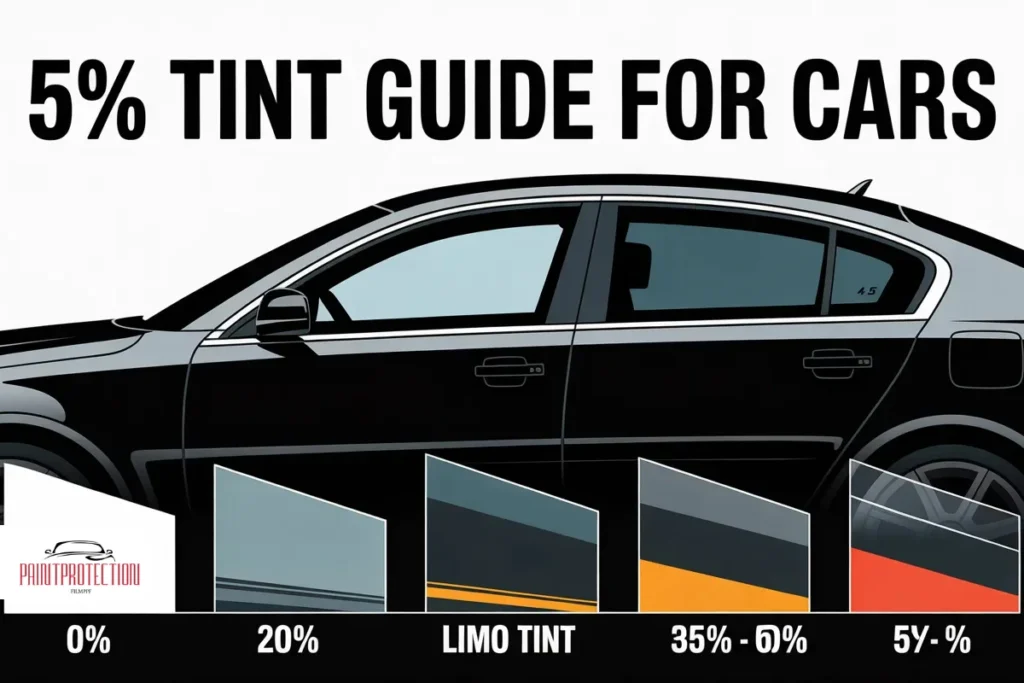
| 5% (Limo) | 5% | Maximum | Very High | Restricted |
| 20% | 20% | High | High | Legal in many states |
| 35% | 35% | Moderate | Moderate | Widely legal |
| 50% | 50% | Low | Low | Legal almost everywhere |
Key Takeaway: 5 % tint is best for rear windows or luxury aesthetics, while 20–35 % balances privacy, visibility, and legality.
Maintenance and Longevity
Maintaining 5 percent tint is crucial for appearance and durability:
- Cleaning: Use a soft microfiber cloth and mild, ammonia-free cleaner.
- Avoid scratching: Don’t use razor blades or abrasive tools.
- Longevity: High-quality ceramic tints last 5–10 years; dyed films may fade sooner.
Pro Tip: Wash your car gently and avoid automatic brushes on tinted windows to extend the life of the film.
Pros and Cons of 5 Percent Tint
Pros
- Maximum privacy and security.
- Superior heat and UV protection.
- Sleek, luxury appearance.
Cons
- Restricted legal use in many states.
- Can reduce night visibility.
- Potentially costly for high-quality films and professional installation.
Expert Insights: What Car Detailers Recommend
Car detailing professionals often share these tips for 5 % tint:
- Choose ceramic over dyed film for longevity and heat rejection.
- Check local laws first—many drivers get fines for front-window limo tints.
- Rear windows are safest for ultra-dark tints while staying mostly compliant.
- Professional installation is worth the investment; DIY can ruin the finish.
- Maintenance matters: Gentle cleaning preserves tint and clarity.
Legal Compliance Tips
To avoid fines or forced removal:
- Verify state regulations for each window: front, rear, and windshield.
- Keep a tint compliance certificate if available from the installer.
- Consider slightly higher VLT for front windows to balance style, safety, and legality.
Pro Tip: Many states allow darker rear tints while restricting front windows to 35–50 % VLT. Planning placement carefully avoids legal headaches.
Final Thought
5 percent tint offers unmatched privacy, heat reduction, and a luxury aesthetic, but it’s not for every vehicle. Balancing style, safety, and legality is key. High-quality films, professional installation, and proper maintenance maximize benefits and minimize risks. Whether you are a car owner seeking style or a detailing professional, understanding 5 percent tint fully ensures you make smart choices that comply with the law while enhancing your vehicle.
Consult a certified tint installer today to explore your options and find the perfect balance between privacy, safety, and style.
Is 5 percent tint legal in the USA?
It depends on the state. Most states restrict 5 % tint on front windows and windshields but allow it on rear windows. Always check your local DMV rules.
Can I drive safely with 5 percent tint at night?
Visibility is significantly reduced in low light. Many drivers use higher VLT on front windows for safer night driving.
How long does 5 percent tint last?
Ceramic films can last 5–10 years with proper care. Dyed films may fade within 3–5 years.
Should I install 5 percent tint myself or hire a professional?
Professional installation is highly recommended for bubble-free application, legal compliance, and warranty coverage.
How much does 5 percent tint cost?
Costs range from $100–$600 depending on film type, vehicle size, and installation quality. Ceramic films are the most durable and heat-resistant.