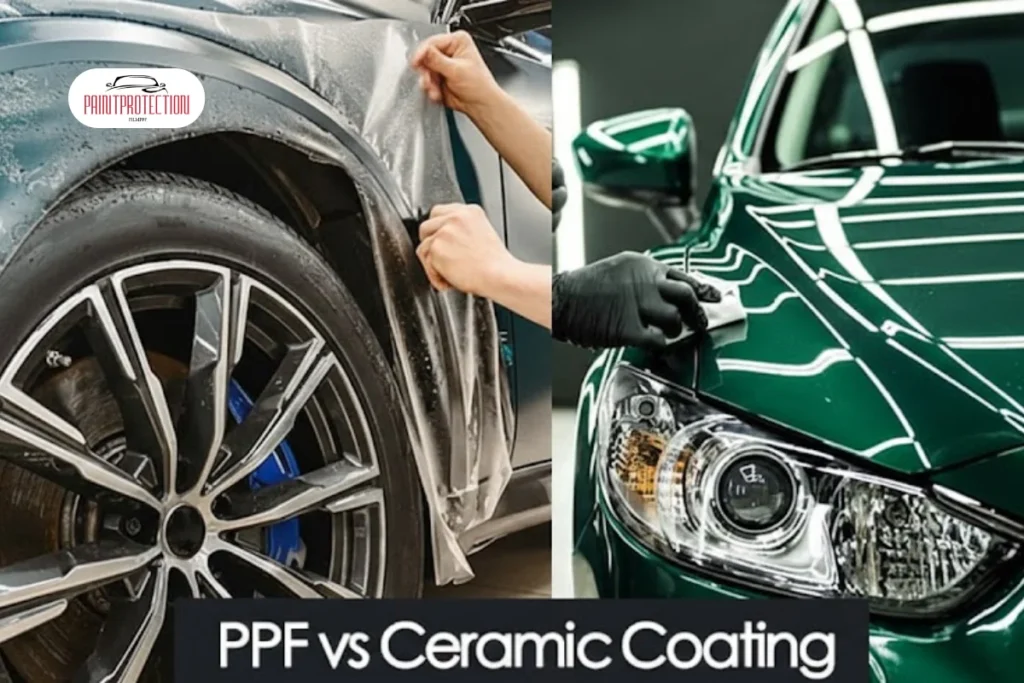
When it comes to protecting your vehicle’s paint, many car owners wonder about ceramic coating vs PPF. Both options offer long-lasting protection, but they work differently and suit different needs. Understanding how each protects your car, their benefits, and costs can help you choose the right solution to keep your car looking new and maintain its value.
What is Ceramic Coating?
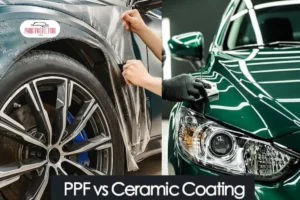
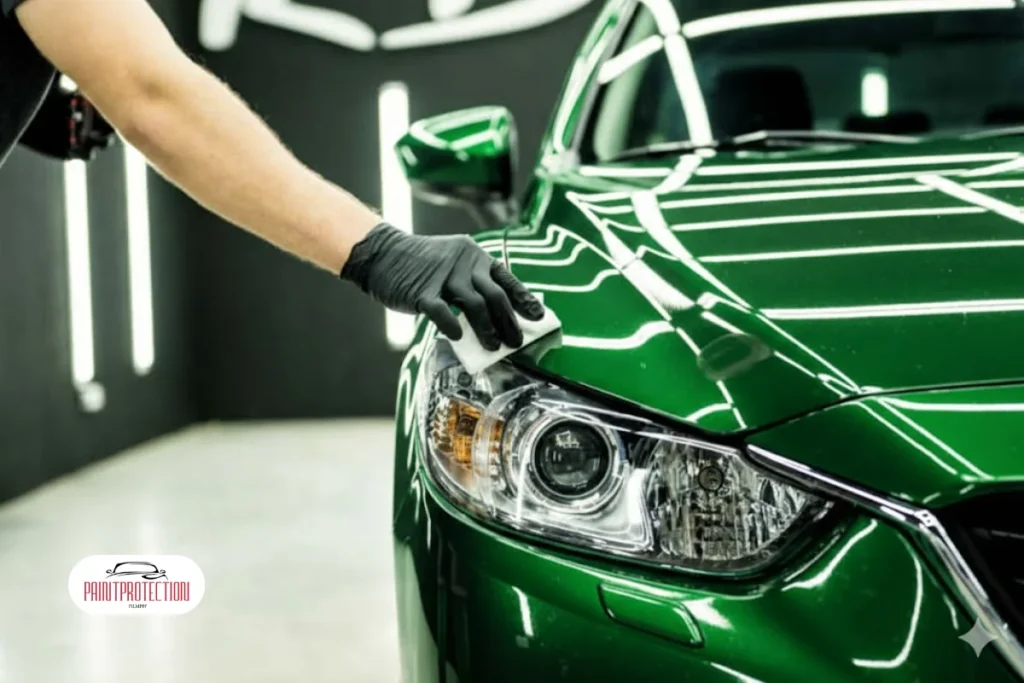
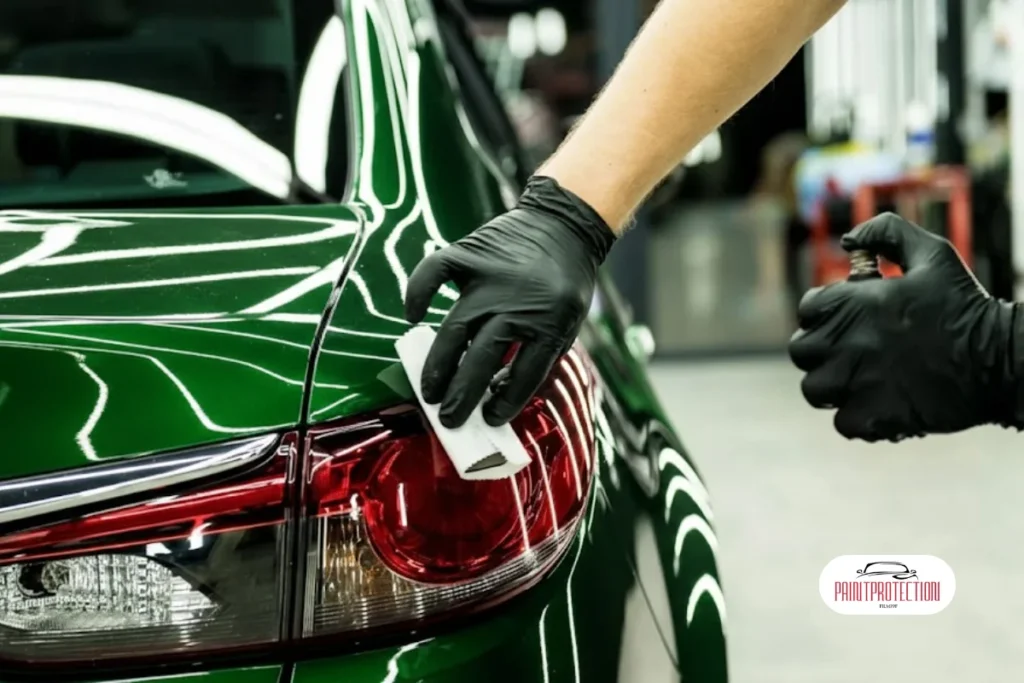
Ceramic coating is a liquid polymer applied to your car’s exterior. It chemically bonds with the paint, creating a durable layer that repels water, dirt, and minor contaminants.
Key benefits:
- Hydrophobic surface that repels water and dirt
- Enhances gloss and shine for a showroom finish
- Protects against minor scratches, bird droppings, and UV damage
- Lasts 2–5 years depending on quality and maintenance
Ceramic coating works best for car owners looking to maintain a glossy finish and protect against environmental damage. It’s ideal for luxury and high-value vehicles that spend most of their time on the road or in the garage.
What is Paint Protection Film (PPF)?
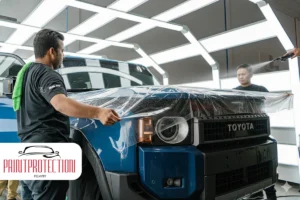
Paint Protection Film (PPF), also known as clear bra, is a thick, transparent polyurethane film applied directly to the car’s paint. It acts as a physical barrier against impacts, scratches, and chips.
Key benefits:
- Guards against rock chips, scratches, and minor abrasions
- Self-healing properties for minor scratches
- UV protection to prevent paint fading
- Can cover high-impact areas like bumpers, hoods, and side mirrors
- Lasts 5–10 years depending on quality and care
PPF is highly recommended for vehicles frequently driven on highways or in areas prone to road debris. It’s perfect for owners who prioritize maximum protection over glossy appearance.
Ceramic Coating vs PPF: Head-to-Head Comparison
| Feature | Ceramic Coating | Paint Protection Film (PPF) |
|---|---|---|
| Protection Type | Chemical barrier against contaminants | Physical barrier against chips and scratches |
| Durability | 2–5 years | 5–10 years |
| Gloss & Appearance | High gloss and hydrophobic finish | Clear, slightly reflective; may not enhance shine as much |
| Scratch Protection | Minor scratches only | Moderate to severe scratches; self-healing |
| Maintenance | Easy washing, no waxing required | Wash carefully; avoid abrasive cleaning |
| Cost | $500–$2,000 depending on package | $1,500–$6,000 for full coverage |
| Installation | Professional or DIY kits | Professional installation recommended |
Pros and Cons
Ceramic Coating
Pros:
- Enhances color and shine
- Makes cleaning easier
- Long-lasting protection from environmental contaminants
Cons:
- Does not prevent rock chips or deep scratches
- Requires proper surface prep and professional application for best results
- Costs can vary significantly
Paint Protection Film
Pros:
- Superior protection from physical damage
- Self-healing properties for minor scratches
- Covers vulnerable areas completely
Cons:
- Installation is costly
- Slight reduction in gloss compared to ceramic coating
- Not a replacement for proper maintenance
Which Option is Right for You?
The choice between ceramic coating and PPF depends on your priorities:
- Choose ceramic coating if your goal is to enhance shine, reduce washing frequency, and protect against environmental damage.
- Choose PPF if your focus is on preventing rock chips, scratches, or damage from debris and you’re willing to invest in professional installation.
- Many car enthusiasts combine both: PPF on high-impact areas and ceramic coating on the full vehicle for maximum protection and aesthetics.
Cost Considerations
- Ceramic coating: Typically ranges from $500 to $2,000 for a full car application. Premium coatings can last longer but cost more.
- PPF: Costs between $1,500 and $6,000 for full coverage. Partial coverage for hood, bumpers, and mirrors is cheaper.
- Maintenance for both includes regular washing, avoiding harsh chemicals, and periodic inspections.
Practical Tips for Long-Term Protection
- Wash your car regularly with pH-neutral soap.
- Avoid automated car washes with brushes to protect coatings or films.
- Apply ceramic boosters every 6–12 months to maintain hydrophobic properties.
- Inspect PPF for lifting or discoloration and have professionals repair if needed.
- Park in shaded areas to reduce UV exposure.
Final Thought
Both ceramic coating and PPF offer significant protection for your vehicle, but their strengths differ. Ceramic coating provides a glossy, easy-to-clean finish while guarding against environmental damage, whereas PPF offers robust physical protection from scratches and chips. Understanding your driving habits, car type, and budget will help you make the best choice. For maximum protection, many enthusiasts opt to use both.
Which is better, ceramic coating or PPF?
It depends on your needs: ceramic coating enhances shine and repels dirt, while PPF protects against scratches and rock chips.
Should I do PPF first or ceramic coating?
Apply PPF first, then ceramic coating on top for added gloss and protection.
Which costs more, PPF or ceramic coating?
PPF generally costs more, especially for full coverage, while ceramic coating is usually cheaper.
How much does ceramic coating cost in Pakistan?
Prices range from PKR 25,000 to 120,000 depending on car size, quality, and brand.
Does PPF last longer than ceramic coating?
Yes, PPF typically lasts 5–10 years, while ceramic coating lasts 2–5 years.